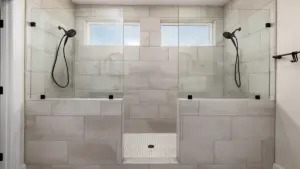
Folding Bench vs Built-In Tiled Bench for ADA Curbless Showers
In most Folding bench vs built-in tiled bench for ADA curbless showers decisions, the folding seat is the better choice when a 30-by-60-inch clear floor…
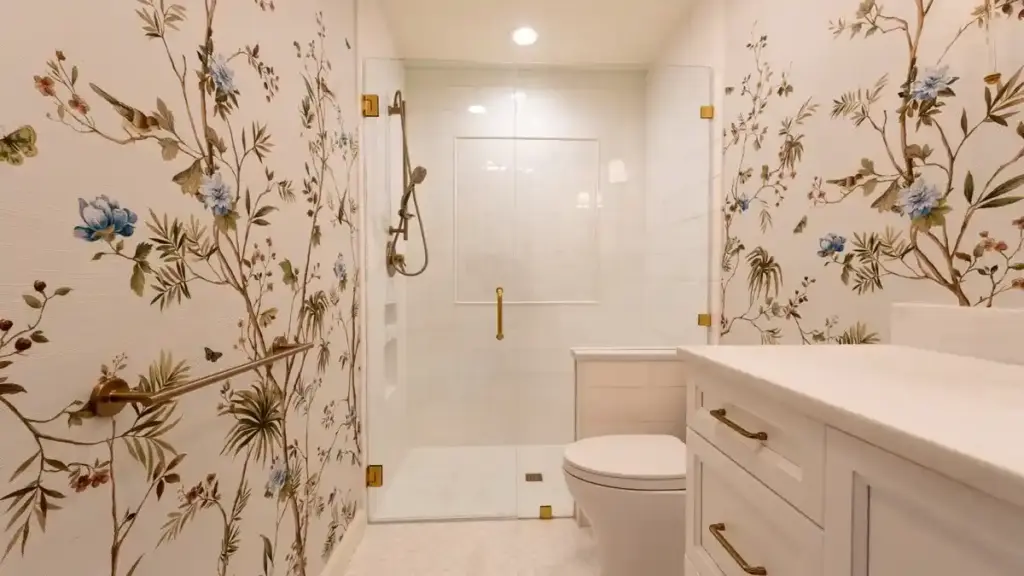
Modern bathroom with glass shower and built-in bench
Quick Answer: In most Folding bench vs built-in tiled bench for ADA curbless showers decisions, the folding seat is the better choice when a 30-by-60-inch clear floor space has to stay open, while the built-in tiled bench is the better choice when the room is large enough to absorb a permanent seat. This article compares the two options for ADA curbless showers and keeps the question tied to wall strength, waterproofing, and available floor area.
An ADA shower seat in a curbless shower is usually better as a folding seat if you need floor space, and better as a built-in tiled bench if you want a permanent transfer point. The catch is that the right answer changes with wall strength, waterproofing details, and whether that 30-by-60-inch clear floor space has to stay open. This comparison settles which one fits which bathroom.
Key Takeaways
- Folding seats protect usable floor area, so they fit tighter rooms and preserve turning room better.
- Built-in tiled benches can feel sturdier and can be easier to sit on, but they eat into space and add waterproofing risk at corners.
- A wall-mounted seat only works if the wall has proper backing and anchor support; it is not a drywall add-on.
- A tiled bench needs careful slope, membrane continuity, and corner detailing or it becomes a leak trap.
- If the bathroom must keep a clear turning path free, the folding option usually wins.
Our Top 3 Picks at a Glance
1 Best Overall: Wall-mounted folding seat
Last updated: November 14, 2026
2 Best Budget Pick: Simple phenolic folding seat
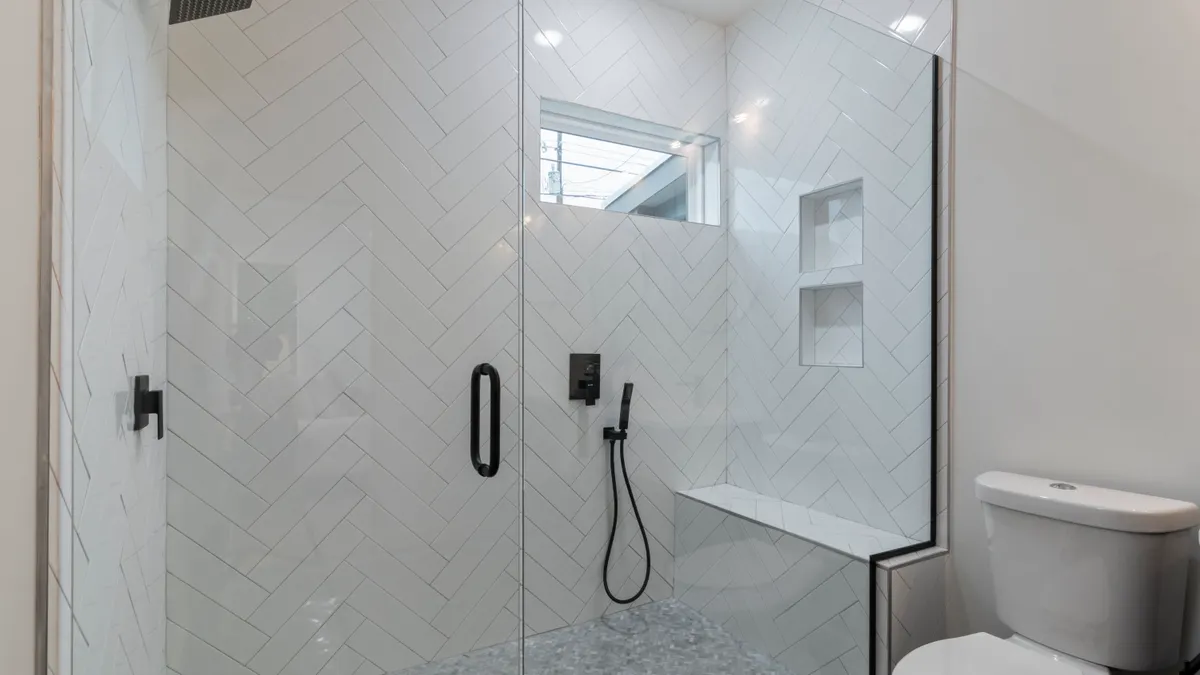
3 Best Heavy-Duty / Upgrade Pick: Built-in tiled masonry bench
| Product / Option | Best For | Core Spec | Standout Feature | Action |
|---|---|---|---|---|
| Wall-mounted folding seat | Tight curbless baths that need clear floor space | Folds flat against the wall | Keeps the walking and turning zone open | Check current availability at the brand site and major retailers |
| Phenolic folding seat | Wet rooms that need a low-maintenance surface | Solid-surface style seat panel | Easy wipe-down face, fewer seams than wood | Compare current listings from the brand site, Amazon, or Walmart |
| Teak folding bench | Users who want a warmer sitting surface | Fold-up slatted or plank seat | More comfortable to touch than hard plastic | Look for current stock at specialty bath retailers and Amazon |
| Built-in tiled masonry bench | Larger curbless showers with enough width | Permanent bench tied into the shower build | Feels like part of the room, not an add-on | Review specs with the tile setter and waterproofing supplier |
What is the real difference between a folding seat and a tiled bench?
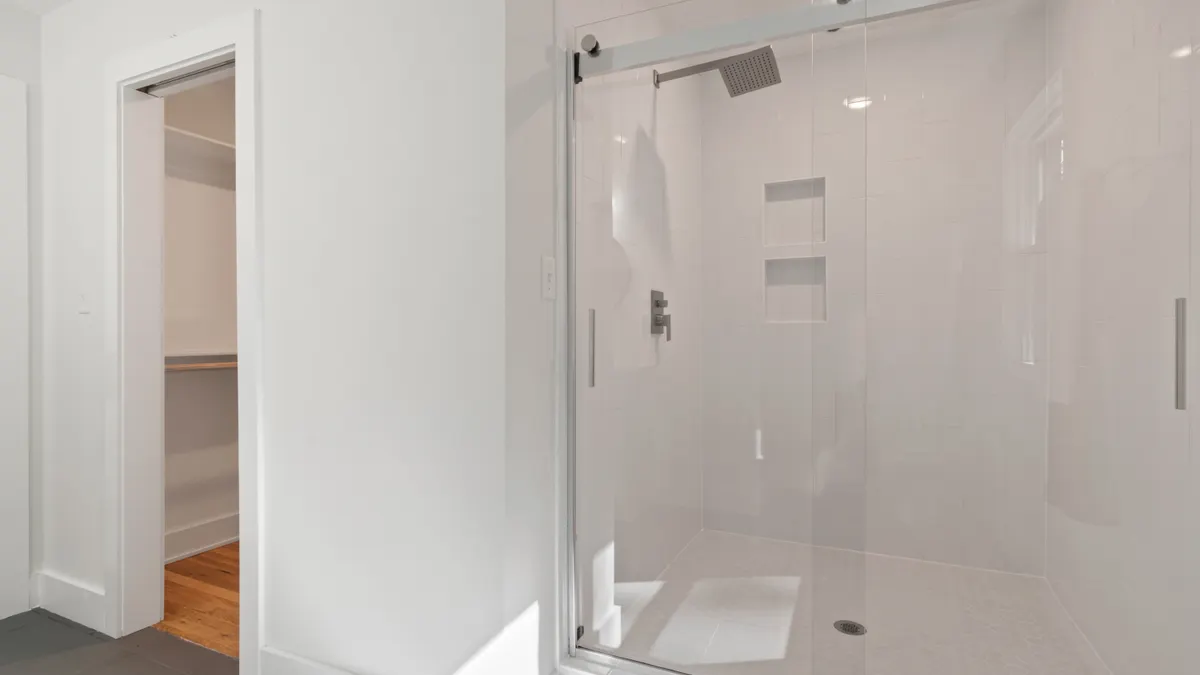
A folding bench wins on space, while a built-in tiled bench wins on permanence. That is the whole decision in plain English. One gives you back clear floor space when the seat is folded up; the other gives you a fixed, masonry-style perch that does not move.
Picture this: you are trying to keep an ADA-friendly turning path open in a small bath, and every inch matters. A folding seat mounted to a reinforced wall can disappear when not in use, which helps protect the clear floor space in front of the shower. A built-in bench stays in place, taking up room.
The trade-off is just as blunt. Folding seats depend on structural wall anchors and proper backing, while tiled benches depend on a waterproofed box, correct slope, and careful corner detailing. One problem is support. The other is water management.
- Folding seat: better for space, easier to keep out of the way
- Built-in tiled bench: better for a fixed sitting surface and a more permanent feel
- Folding seat risk: wall support must be right
- Built-in bench risk: waterproofing errors can turn into leaks
For readers who want the broader layout rules, this page fits under the site’s main guide on ADA curbless shower dimensions and design. For the installation side, see our internal guide on ADA shower grab bar placement and curbless shower waterproofing.
Which option protects ADA clear floor space better?
The folding seat protects ADA clear floor space better, especially in a compact room. If the goal is to preserve a 30-by-60-inch clear turning radius as much as possible, a wall-mounted seat is usually the safer choice because it can fold away when the shower is not in use.
Picture this: you need the room to work for a walker, a wheelchair transfer, or just plain daily movement, and a fixed bench would pinch the entry. A folding bench can sit high enough to help with transfer, then get out of the way. That matters more than people think when the toilet, vanity, and shower all compete for the same few feet.
A built-in tiled bench works best when the room has slack. If the shower enclosure is generous and the bench does not crowd the access route, the permanent seat can feel more stable and easier to plan around. But in a small curbless bath, a bench that never moves is space you never get back.
- Better for small bathrooms: folding seat
- Better for rooms with extra width: tiled bench
- Better for keeping the entry clear: folding seat
- Better for a fixed transfer station: built-in bench
If the layout is still in draft, compare this choice with our internal guide on ADA curbless shower dimensions.
Wall-mounted folding shower seat: who should actually use it?
A wall-mounted folding shower seat is the right call when you need access first and seating second. It fits people designing for a tighter curbless room, a shared bath, or a shower that must stay open for more than one user profile.
The best case is simple: you want a seat, but not a permanent obstacle. A phenolic folding seat is often chosen because the surface is easy to clean and does not depend on wood finish maintenance. A teak folding bench can feel warmer and less clinical, which some users prefer in a home bath.
The weakness is not subtle. A folding seat is only as good as the wall behind it, and that means proper framing, structural wall anchors, and mounting hardware that can handle repeated loading. If the seat is attached to a weak wall, it is the wrong product no matter how good the finish looks.
A second drawback is comfort and confidence. Some users dislike the slight flex or narrow sitting surface compared with a masonry bench. The hinge also creates a moving part that can wear over time.
Who Should Skip This: If the shower is large enough for a fixed bench and the owner wants a stone-like perch with no hinge or wall hardware exposed, choose the built-in tiled bench instead.
Buy this if: you are fitting a compact curbless shower and need to preserve clear floor space.
Skip this if: you need a rigid, immovable seat and the wall cannot be properly reinforced.
For nearby hardware decisions, see ADA shower seat requirements and bathroom reinforcement for wall-mounted fixtures.
Built-in tiled bench: when does it win?
A built-in tiled bench wins when the shower has enough room and the owner wants a permanent, integrated seat. It is the stronger choice for a cantilevered shower bench look or a full tiled masonry bench that feels like part of the wet room architecture.
Picture this: the bath is large enough that the bench does not choke the shower opening, and the rest of the layout already gives you the needed circulation. In that setup, a tiled bench can feel cleaner visually and more substantial physically. There is no hinge to inspect and no seat to fold down before sitting.
The problem is that tile benches are maintenance projects hidden inside the wall system. Every inside corner, seam, and bench top has to be detailed so water does not collect where it should not. A tiled shower bench waterproofing failure is not cosmetic; it can send moisture into framing and under the finished surface.
That is why this choice rewards careful installers and punishes shortcuts.
- Strengths: permanent feel, stable seating, no moving parts
- Weaknesses: harder waterproofing, more framing and tile detailing, always takes up space
- Best fit: larger curbless showers with room to spare
- Worst fit: tight rooms where the bench steals the path you need
Who Should Skip This: If keeping the 30-by-60-inch clear floor space open is the main challenge, use a folding seat instead.
Buy this if: you have enough room for a permanent bench and want a fixed seating point.
Skip this if: the shower footprint is tight or the waterproofing plan is already complicated.
The honest side-by-side
A folding seat wins for space management, while a built-in tiled bench wins for permanence and a more custom look. The right choice becomes obvious once the bench starts competing with the floor plan.
| Criteria | Folding Seat | Built-In Tiled Bench | Winner for [condition] |
|---|---|---|---|
| Floor space impact | Folds out of the way | Always occupies floor area | Folding seat for small bathrooms |
| Turning clearance | Easier to protect clear path | More likely to intrude | Folding seat when clearance matters |
| Installation demand | Needs reinforced wall and anchors | Needs framing, slope, waterproofing, tile work | Folding seat for simpler builds |
| Waterproofing risk | Lower at the seat itself | Higher at corners and seams | Folding seat for fewer leak points |
| Visual permanence | Looks like an accessory | Looks built-in and intentional | Tiled bench for custom finishes |
| Comfort perception | Can feel narrower or less solid | Feels more substantial | Tiled bench for steady seating |
| Maintenance | Less grout, fewer tile joints | Grout and membrane details need care | Folding seat for low-fuss cleaning |
| Retrofit flexibility | Easier to swap later | Hard to change after tile work | Folding seat for future changes |
| Load path | Depends on wall anchors and backing | Spreads through framed structure | Tiled bench for permanent build-out |
The table points to one pattern: the folding seat is the better engineering choice in cramped rooms, while the built-in bench is the better finish choice in larger, carefully built showers. That is not a minor difference. It is the decision.
The hidden trade-off nobody says out loud
The folding bench wins when the wall is planned first. The built-in tiled bench wins when the waterproofing plan is already strong. If either of those parts is weak, the “prettier” option becomes the riskier one.
Picture this: you are comparing the two and thinking only about looks. That misses the part that breaks bathrooms later. A folding seat does not forgive bad wall backing. A tiled bench does not forgive sloppy membrane work. One fails at the structure; the other fails at the shell.
This is also where the site’s hub matters. The dimensions guide handles the floor-plan math. This article is about the seat choice that sits inside that plan. If the room already struggles to preserve a 30-by-60-inch clear floor space, the bench decision should serve that constraint, not fight it.
A small note on materials: phenolic and teak folding seats behave differently in daily use, but both still depend on the wall behind them. A masonry bench, by contrast, can be more comfortable to sit on simply because it is fixed and broad, but that comfort comes with more tile joints and more places to detail correctly.
- The real question is not “which looks nicer?”
- The real question is “which one preserves function?”
- The real question is “which one matches the room size?”
The verdict: which one should you choose?
Choose the wall-mounted folding seat if the shower is in a small or shared bathroom, the clear floor space is tight, or the layout must stay flexible. Choose the built-in tiled bench if the room is large enough to spare the space, the bench is meant to feel permanent, and the waterproofing plan is already strong. Neither if the wall cannot support a seat or the bench would crush ADA circulation.
That is the clean answer.
Picture this: you are finalizing a curbless bath and the bench is the last piece standing between a workable plan and a cramped one. If the seat has to disappear to protect movement, fold it. If the room can absorb a fixed bench without hurting access, tile it.
Exception scenarios where the verdict flips
- If the room is unusually wide but the user needs a very stable seat for transfers, the built-in bench can beat the folding option.
- If the wall framing cannot be upgraded easily, neither option should be forced; the design needs a different seating plan.
- If the owner wants the least visible hardware possible and accepts the waterproofing complexity, the tiled bench may win on finish alone.
- If the shower must stay open for multiple users with different mobility needs, the folding seat is usually the safer long-term choice.
One last thing before you pick
The folding bench is the practical choice for most ADA curbless showers, and the built-in tiled bench is the design-forward choice for rooms that can afford the space. The wrong move is choosing the bench first and the layout second. That is how a good shower turns into a compromised one.
If the project lives or dies on circulation, pick the folding seat. If the room is generous and the builder can execute waterproofing without shortcuts, pick the tiled bench. That’s the call.
Drafted with AI; not yet reviewed by a person.